PILLS OF INSIGHT
A modest blog about my journey in the games industry
Key Takeaways from the Talk: Developing All On Board!
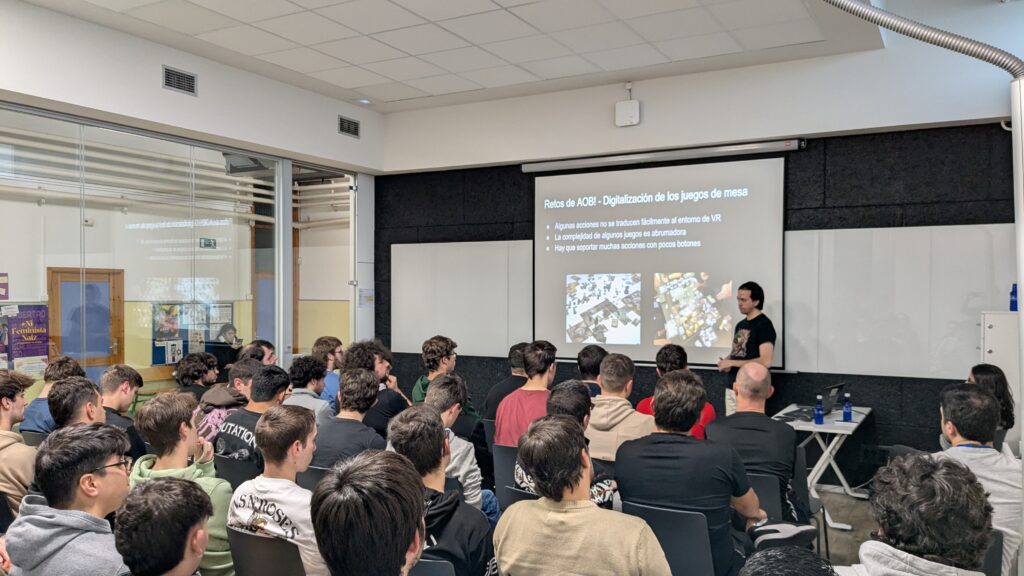
I took a trip to Donostia recently to give a talk about my experience developing for VR games. Since the audience seemed to enjoy the talk, I decided to write about the topics I discussed in this blog. This will be apparent in the brief format of this post, although I may expand on any of these topics in the future.
To put into context, All On Board! is a VR platform designed to play board games either solo or with friends online and offers modding tools.
Designing Controller-Agnostic Input
Fortunately, we are getting closer to a world where all VR controllers are designed following a
standard, just as console controllers follow their own.
However, until we fully land in that world, we must face supporting many diverse controllers.
Not only that, but they often have very few buttons.
When it rains, it pours, so my team and I have had to design a platform with as many actions as
All On Board! with only a handful of buttons that feels consistent across
platforms.
To solve this, we took two paths: On the one hand, since not all controllers have a "menu"
button, we have opted to create a menu that requires the player to look at their wrist to be
displayed.
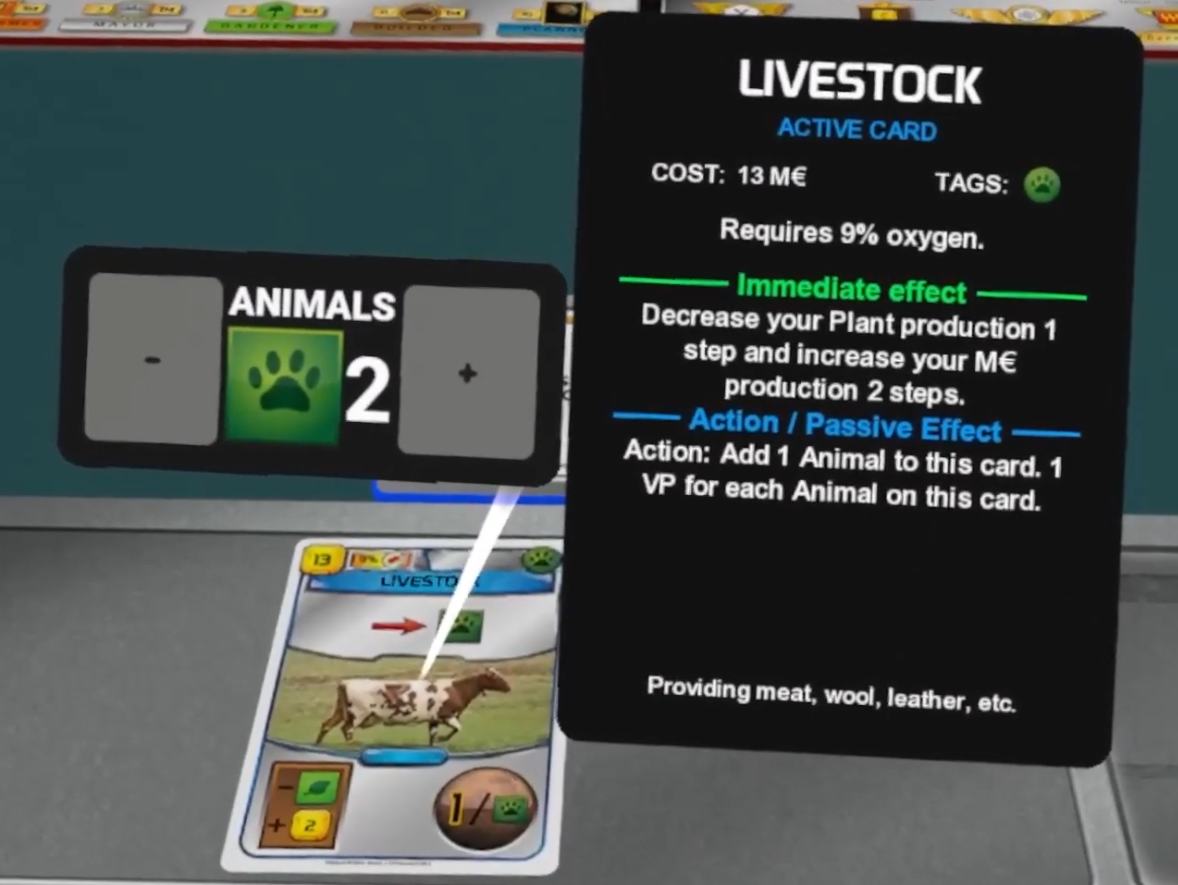
On the other hand, we decided to create what we call "Smart Glance", which is a contextual
menu that provides information and enables actions for all elements found on All On
Board!. This way, we are not limited by the buttons at our disposal, and in turn, it allows us
to segment the information and actions so that they do not overwhelm and are only shown when
they are relevant.
Translating mechanics to VR
Board games are designed for the real world, so actions that are trivial in real life can
become a
headache in VR.
This is something we need to tackle on a daily basis, as we are always bringing new games onto
the platform. While it becomes more formulaic as time passes, it still presents
challenges.
For instance, let's say a game requires a player to take a small token and move it a few inches
away. This can be taxing in VR because of the lack of granular precision in the movement. In
such cases, we automate the action in a way that feels intuitive, thereby negating
the possible frustration the player would feel in a full sandboxed environment.
Internationalization
In the board games industry, when a game is localized, each element is treated separately to
fit
the localized content perfectly. For instance, you would have an InDesign file for each
locale
with all the cards of a deck and small tweaks would be done to each card.
You can see how, in the following image, each card gives the bottom panel a different height.
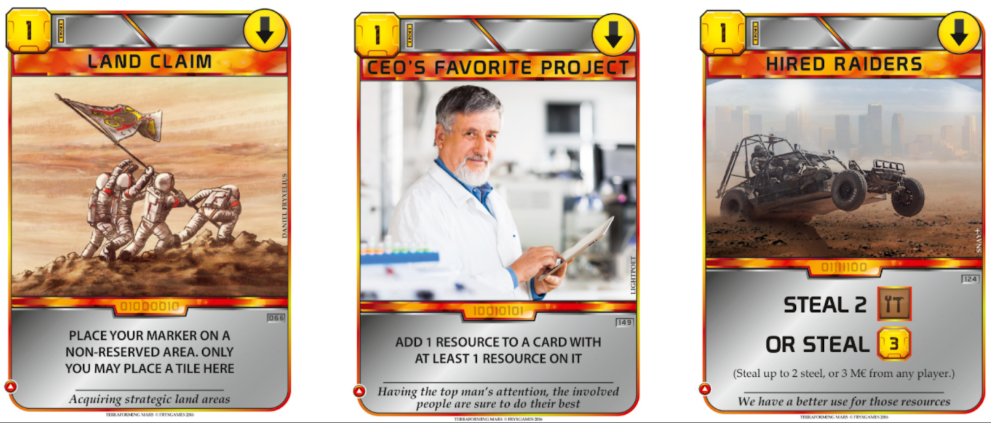
This makes sense if you are looking to have the best presentation possible. However, All On
Board! is not a physical medium and it must follow different rules; I would summarize how we
approach
internationalization as "one size fits all".
We have to digitize a game in a short timeframe, so we don't have time to treat each
element in
each language as a different asset that can be tweaked as much as it would require.
With that in mind, we standardize the layout of all elements and their UI in a way that
supports all locales seamlessly.